How to Start an Inflatable Rental Business in 2026
A practical startup guide covering equipment, insurance, pricing, delivery, marketing, and online booking for new bounce house rental owners.
- Getting started
- Operations

Starting an inflatable rental business is one of the most accessible paths into event services. Startup costs are lower than many trades, demand stays steady in most markets, and repeat customers are common once you deliver a clean unit on time. This guide walks through the decisions that separate profitable operators from owners who underprice, underinsure, or lose weekend leads to competitors with a book-now button.
Whether you are launching a side hustle with two units or building a full party rental company, the fundamentals are the same: commercial-grade equipment, real insurance, clear pricing, reliable delivery, and a booking system that works when your phone does not.
Validate demand in your market before you buy
Before you finance a trailer full of inventory, spend a weekend researching local demand. Search Google for bounce house rentals near you, check Facebook Marketplace and Nextdoor for party posts, and note how many competitors already serve your zip codes. A crowded market is not automatically a no - it often means proven demand - but you need a wedge: faster booking, better water slides, clearer pricing, or stronger service in underserved suburbs.
Talk to parents, HOA boards, churches, and school PTAs about what they rent and what frustrates them. Common complaints - slow quotes, surprise delivery fees, dirty units, and no weekend availability - are opportunities if you design your operation to fix them.
Start with the right commercial equipment
Begin with two to three high-demand units rather than a huge catalog. A standard bounce house, a combo unit with a slide, and a water slide (if your climate and season support it) cover most birthday and backyard jobs. Buy commercial-grade equipment with manufacturer documentation. Home-use units from big-box stores are a liability and an insurance risk.
Budget beyond the unit price. You will need commercial blowers, stakes or sandbags, ground tarps, extension cords rated for outdoor use, generators for parks without power, cleaning supplies, repair patches, and a reliable trailer or box truck. Many new owners underestimate cleaning time and storage space - wet units after a water-slide weekend need room to dry before the next booking.
As you grow, add themed units and obstacle courses only when your calendar shows consistent turnaways for those categories. Inventory that sits idle still costs insurance, storage, and maintenance.
Get insured before your first delivery
Commercial general liability is non-negotiable. Many venues, schools, and HOAs will not let you set up without a certificate of insurance naming them as additional insured. Talk to an agent who understands amusement and inflatable rentals - standard small-business policies often exclude amusement devices.
Ask specifically about participant liability, damage to rented equipment, and whether your policy covers setup and teardown on customer property. Keep certificates easy to send from your phone; last-minute venue requests are common on Friday afternoons.
Price for profit, not just competition
Factor in delivery time, setup labor, cleaning, fuel, depreciation, payment processing, and marketing - not just the rental day rate. Matching the cheapest competitor on Facebook often means you are subsidizing their underpricing.
Build a simple cost sheet per unit: purchase price amortized over expected life, average cleaning hours, average delivery miles, and a target margin. Then set weekend and weekday rates. Flat delivery fees are simple but often leave money on the table for long-distance jobs and overcharge nearby customers.
Deposits protect your calendar. A meaningful deposit collected at booking reduces no-shows and last-minute cancellations that leave a truck idle on your best Saturday.
Plan delivery zones and crew capacity
Your service area is a profit decision, not a map vanity metric. Long hauls on peak Saturdays cost fuel, overtime, and the opportunity to run a second local job. Define a core radius where you can stay competitive, then price outer zones higher - or decline them on peak days.
Decide early whether one person can deliver solo or you need a two-person crew for larger slides. That choice affects labor cost, safety, and how many jobs you can stack in a day.
Launch with online booking from day one
Even a simple catalog and booking form beats phone-tag for capturing after-hours demand. Parents research parties at night and on weekends - exactly when most new rental offices are closed. If your only channel is a phone number, you lose shoppers to whoever has real-time availability and a deposit checkout.
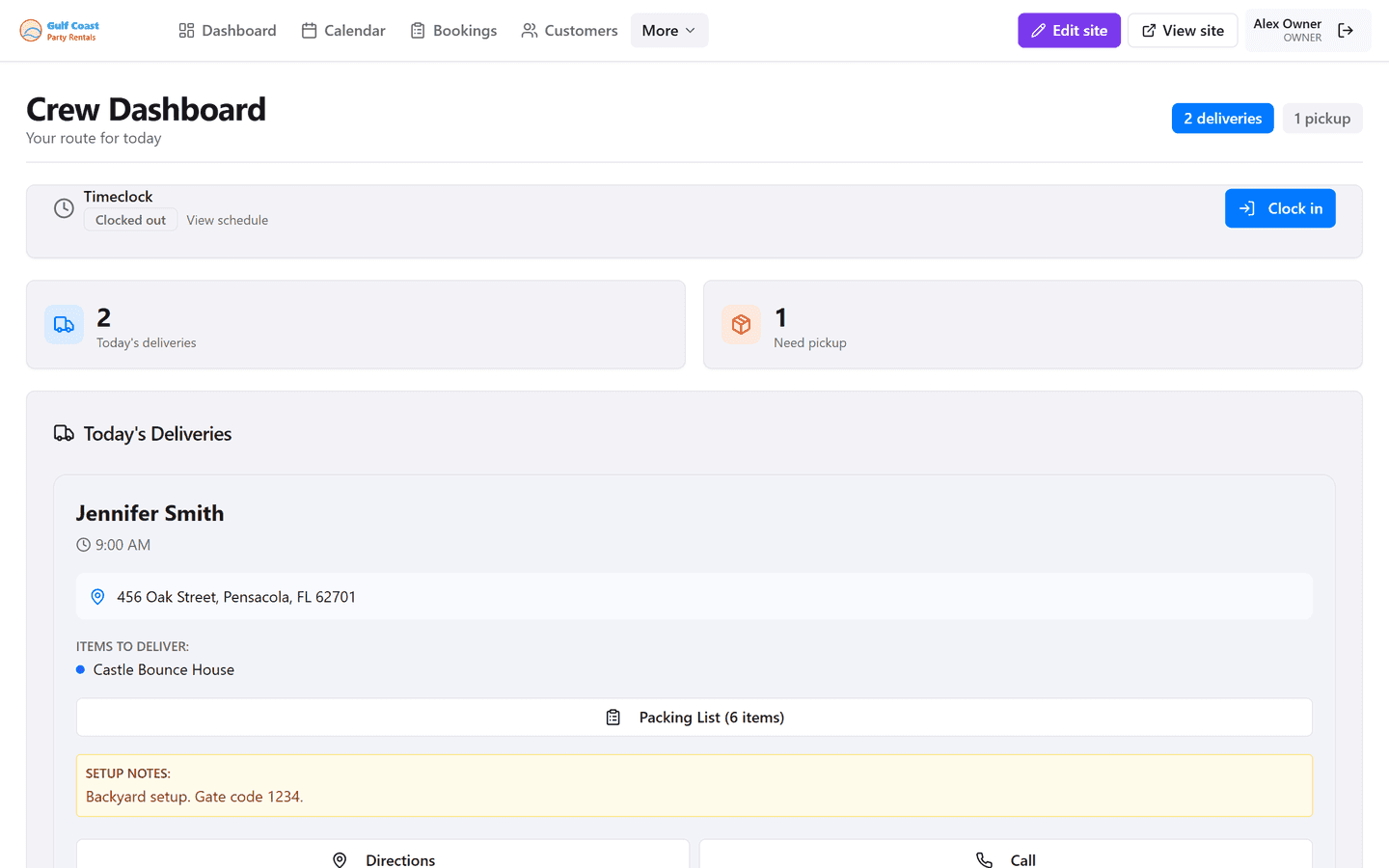
Your booking flow should show units, dates, delivery expectations, and a clear total before payment. Platforms like InflataHQ give you a branded website, real-time availability, deposits, digital waivers, and a staff dashboard so you look established before you have a huge fleet.
Market where party planners already look
Claim and complete your Google Business Profile with photos, service areas, and booking links. Local Facebook and Instagram ads still work when they send traffic to a page that can take a deposit. Partner with party planners, bounce-friendly venues, and schools for referral relationships.
Your website should answer price ranges, delivery area, and availability without forcing a phone call. Track which channels produce booked jobs - not just likes or form fills - so you double down on what pays for itself.
Operations checklist for your first 90 days
- Confirm insurance certificates and safety procedures for every unit.
- Document setup, teardown, and cleaning standards so quality stays consistent.
- Use one calendar for all bookings - no sticky notes as the source of truth.
- Collect deposits online and send digital waivers before delivery day.
- Ask every happy customer for a Google review within 24 hours of pickup.
Common mistakes to avoid
Buying too much inventory before demand is proven, skipping commercial insurance, underpricing delivery, and relying only on phone bookings are the fastest ways to burn cash. Another quiet killer is poor photo quality - parents compare units visually; dark, cluttered photos lose to clean backyard shots every time.
Treat your first season as a systems season: refine zones, scripts, cleaning routines, and booking rules. The operators who win long-term are rarely the ones with the flashiest unit on day one - they are the ones who show up on time, leave a clean yard, and make booking effortless.
Legal and administrative basics
Register the business structure your accountant recommends, open a dedicated business bank account, and track every expense from day one. Confirm local rules for home-based storage, trailer parking, and any permits required for certain public events.
Build a simple packet you can send venues: certificate of insurance process, unit specs, and setup requirements. Looking organized wins school and corporate work even when you are still a small fleet.
A realistic first-year growth path
Month one to three: two or three units, tight service area, online booking live, reviews from every job. Month four to nine: add one high-demand unit only when turnaways justify it, refine delivery pricing, and stabilize crew help for peak Saturdays. End of year: decide whether to expand geography, inventory, or both - not all at once.
Cash-flow discipline matters more than vanity fleet size. A smaller catalog that stays booked beats a warehouse of idle themed units.
How InflataHQ helps new rental owners
InflataHQ is built for inflatable and party rental companies that need a branded site, online booking, payments, waivers, and dispatch in one place. You can launch with a template, publish inventory, collect deposits, and run weekend deliveries without stitching together five different tools.
Start with a free trial, add your first units, and open online booking before peak season hits - so after-hours shoppers become paid reservations instead of missed calls.